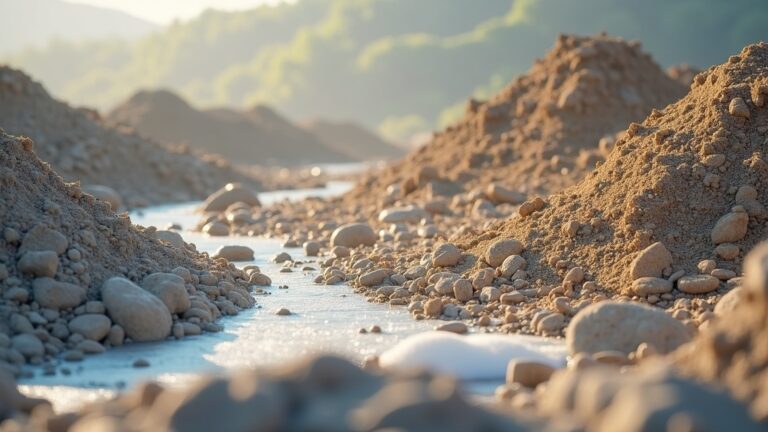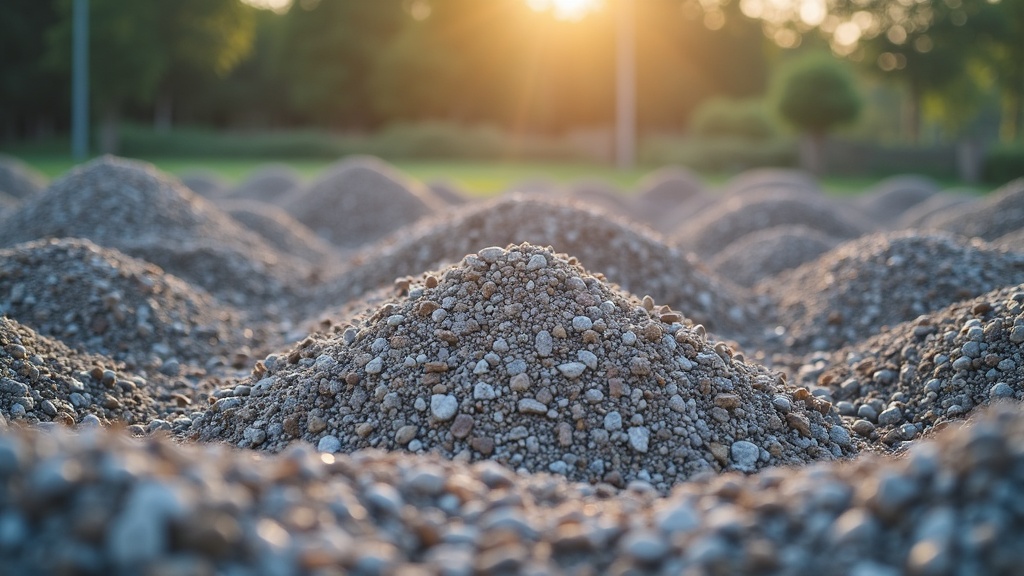
Backfill gravel is a critical material in mining operations, used to stabilize excavated voids and provide ground support. This guide covers its types, selection criteria, and best practices for use in underground mining and tunneling projects.
Table of Contents
- What Is Backfill Gravel?
- Types of Backfill Gravel for Mining
- Selection Criteria for Backfill Gravel
- Application Techniques in Underground Mining
- Frequently Asked Questions
- Comparison of Backfill Materials
- Practical Tips for Backfill Gravel Use
Quick Summary: Backfill gravel refers to coarse aggregate materials used to refill mined-out voids, providing structural support and drainage in underground mining and tunneling. Proper selection of particle size, grading, and material type is essential for ground stability and safety.
Market Snapshot
- The global sand and gravel (industrial) market was valued at $112.4 billion in 2025 (DataIntelo, 2025).
- The U.S. aggregates industry produced $34.6 billion in output value in 2023 (Phoenix Center, 2025).
- The sand and gravel industrial market is projected to reach $178.6 billion by 2034, growing at a 5.3% CAGR (DataIntelo, 2025).
Backfill gravel plays a foundational role in modern mining operations, serving as the primary material for filling underground voids after ore extraction. Without proper backfill, mines face increased risks of ground collapse, subsidence, and water ingress. This article explores the types, selection criteria, and best practices for using backfill gravel in mining and civil engineering contexts.
What Is Backfill Gravel?
Backfill gravel is a granular material, typically composed of crushed stone, natural gravel, or recycled aggregate, used to refill excavated spaces in mining and construction. Its primary purpose is to provide mechanical support to surrounding rock masses, prevent surface subsidence, and facilitate drainage. The U.S. Geological Survey notes that construction sand and gravel is one of the most accessible natural resources and has been used since the earliest days of civilization as a building material (USGS, 2024). In mining, backfill gravel must meet specific gradation requirements to ensure proper compaction and load transfer.
The material is often sourced from local quarries or processed on-site to reduce transportation costs. For underground mining applications, backfill gravel may be mixed with cement or other binders to create cemented backfill, which offers higher strength. However, for many operations, unbound gravel backfill is sufficient when drainage and compaction are the primary concerns.
Importance in Mining Operations
The National Stone, Sand & Gravel Association emphasizes that aggregates such as sand, gravel, and crushed stone are essential construction materials needed to build homes, roads, schools and hospitals and to provide electricity and clean water (NSSGA, 2024). In mining, backfill gravel serves a similar critical function by stabilizing underground openings and allowing for safer extraction of adjacent ore bodies. The material also helps manage groundwater flow by providing permeable pathways that reduce hydrostatic pressure on mine walls.
According to the Phoenix Center for Advanced Legal & Economic Public Policy Studies, natural aggregates are a foundational input to the U.S. economy, and growth in construction spending and infrastructure investment directly translates into increased demand for aggregates such as crushed stone, sand, and gravel (Phoenix Center, 2025). This demand extends to the mining sector, where backfill gravel consumption is rising alongside increased underground mining activity.
Types of Backfill Gravel for Mining
Different mining applications require specific types of backfill gravel, each with distinct physical properties and performance characteristics. The choice depends on factors such as depth of excavation, rock type, and the required strength of the backfill mass.
Crushed Stone Backfill
Crushed stone is the most common type of backfill gravel in mining. It is produced by crushing larger rocks in a quarry and then screening to achieve a desired particle size distribution. Angular particles interlock well, providing excellent load-bearing capacity. Crushed stone backfill is typically used in open stopes and as a base for cemented backfill. The material’s rough texture enhances friction between particles, improving overall stability.
Natural Gravel Backfill
Natural gravel, sourced from riverbeds or glacial deposits, offers rounded particles that provide good drainage but less interlock compared to crushed stone. It is often used in applications where drainage is the primary requirement, such as behind retaining walls or in drainage galleries. Natural gravel may require less processing but can be more expensive to transport if local sources are not available.
Recycled Aggregate Backfill
Recycled concrete or demolition waste can be processed into backfill gravel, offering a cost-effective and environmentally sustainable option. While strength may be slightly lower than virgin materials, modern processing techniques can produce recycled aggregates that meet most mining backfill specifications. This option is gaining popularity as mining companies seek to reduce their environmental footprint.
Selection Criteria for Backfill Gravel
Selecting the right backfill gravel involves evaluating several key parameters to ensure the material performs as intended in the specific mining environment.
Particle Size Distribution
The gradation of backfill gravel is critical for achieving proper compaction and drainage. A well-graded material contains a range of particle sizes, from fine sand to coarse gravel, which allows for dense packing. NOV Containment Solutions states that properly graded pea gravel or crushed stone backfill is critical to system performance; verifying backfill against an approved sieve analysis ensures adequate drainage and structural support around tanks and vaults (NOV Containment Solutions, 2024). For mining applications, a typical specification might require 100% passing a 3-inch sieve and no more than 5% passing a No. 200 sieve.
Compaction Requirements
Backfill gravel must be compacted to achieve the desired density and load-bearing capacity. The compaction method depends on the depth of the fill and accessibility. In narrow stopes, hand-operated vibratory plates may be used, while larger openings allow for roller compactors. The relative density should typically reach 70-85% of the maximum dry density as determined by standard Proctor tests.
Drainage Characteristics
Permeability is a key consideration, especially in wet mining conditions. Backfill gravel with high permeability allows water to drain freely, reducing hydrostatic pressure on mine walls and preventing the buildup of pore water pressure that could lead to instability. The coefficient of permeability (k) for backfill gravel typically ranges from 10^-2 to 10^-4 cm/s, depending on particle size and gradation.
Application Techniques in Underground Mining
Proper placement and compaction of backfill gravel are essential for achieving the desired ground support. The techniques used vary based on the mining method and the geometry of the void being filled.
Pneumatic Backfilling
Pneumatic backfilling uses compressed air to transport backfill gravel through pipes into underground voids. This method is suitable for long-distance transport and can place material in narrow or inaccessible areas. The velocity of the air stream must be carefully controlled to prevent pipe wear and ensure uniform placement. Pneumatic systems are commonly used in cut-and-fill mining operations where rapid backfilling is required.
Hydraulic Backfilling
Hydraulic backfilling involves mixing backfill gravel with water to create a slurry that is pumped into underground voids. The water is subsequently drained, leaving the compacted gravel in place. This method is efficient for large-volume backfilling but requires careful management of water handling and settling ponds. In many modern mines, hydraulic backfill is combined with cement to create a stronger, more cohesive fill mass.
Gravity Backfilling
For shallow mines or surface operations, gravity backfilling is the simplest method. Backfill gravel is dumped directly into the void from trucks or conveyors. While cost-effective, this method provides less control over compaction and may result in uneven settlement. It is typically used for surface subsidence remediation or in combination with other methods for underground applications.
Frequently Asked Questions
What is the difference between backfill gravel and crushed stone?
Backfill gravel is a general term for granular material used to refill excavated voids, while crushed stone is a specific type of backfill gravel produced by mechanically crushing larger rocks. Crushed stone has angular particles that interlock well, providing superior load-bearing capacity compared to natural gravel. In mining applications, crushed stone is preferred for structural backfill, while natural gravel may be used where drainage is the primary concern.
How is backfill gravel tested for quality?
Backfill gravel quality is assessed through sieve analysis to determine particle size distribution, compaction tests to measure density, and permeability tests to evaluate drainage characteristics. Standard tests include the Proctor compaction test (ASTM D698) and the constant head permeability test (ASTM D2434). For mining applications, additional testing may include Los Angeles abrasion resistance and soundness tests to ensure durability under load.
Can backfill gravel be used in all types of mines?
Backfill gravel is suitable for most underground mining methods, including cut-and-fill, stoping, and room-and-pillar operations. However, its effectiveness depends on the specific geology and mining conditions. In very deep mines with high rock stress, cemented backfill may be required instead of unbound gravel. Surface mines may use backfill gravel for reclamation and slope stabilization. Each application requires careful engineering evaluation to determine the appropriate material and placement method.
What are the environmental benefits of using recycled backfill gravel?
Using recycled aggregate for backfill gravel reduces the demand for virgin materials, lowers transportation emissions, and diverts construction and demolition waste from landfills. It also reduces the environmental footprint of mining operations by minimizing the need for new quarry development. Many mining companies are adopting recycled backfill as part of their sustainability programs, and it can often be produced at a lower cost than virgin material.
Comparison of Backfill Materials
Different backfill materials offer varying performance characteristics. The table below compares the most common types used in mining applications.
| Material Type | Load-Bearing Capacity | Drainage | Cost | Typical Application |
|---|---|---|---|---|
| Crushed Stone | High | Moderate | Medium | Structural backfill in stopes |
| Natural Gravel | Low to Moderate | High | Low to Medium | Drainage layers and galleries |
| Recycled Aggregate | Moderate | Moderate | Low | Sustainable backfill options |
| Cemented Backfill | Very High | Low | High | Deep mines and high-stress zones |
Practical Tips for Backfill Gravel Use
Implementing best practices for backfill gravel can improve safety and reduce costs. First, always verify the source material through a certified sieve analysis before use. Second, ensure proper moisture content during compaction to achieve optimal density. Third, consider using a geotextile separator between backfill gravel and fine-grained soils to prevent migration and maintain drainage. Fourth, for deep mine applications, consult with a geotechnical engineer to determine if cemented backfill is necessary. Fifth, implement a quality control program that includes regular testing of particle size distribution and compaction density. Sixth, explore opportunities to use recycled materials to reduce costs and environmental impact.
For more about Backfill gravel, see read the full guide on backfill gravel.
Key Takeaways
Backfill gravel is an essential material for ground support in mining and tunneling, providing stability, drainage, and safety. Proper selection based on particle size, compaction, and drainage requirements ensures optimal performance. As the global sand and gravel market continues to grow, driven by infrastructure development and mining activity, the demand for high-quality backfill materials will increase.
Further Reading
- Our Economic Impact. National Stone, Sand & Gravel Association.
https://www.nssga.org/who-we-are/our-economic-impact - Construction Sand and Gravel Statistics and Information. U.S. Geological Survey.
https://www.usgs.gov/centers/national-minerals-information-center/construction-sand-and-gravel-statistics-and-information - The Economic Impact of the Natural Aggregates Industry: A National Scorecard 2025. Phoenix Center for Advanced Legal & Economic Public Policy Studies.
https://phoenix-center.org/scorecards/AggregatesIndustry2025ScorecardFinal.pdf - Approved Backfill Calculator. NOV Containment Solutions.
https://tools.nov.com/Containment-Solutions/approved-backfill-calculator.html - Aggregates Market Size, Share & Trends Analysis Report. Grand View Research.
https://www.grandviewresearch.com/industry-analysis/aggregates-market - Sand and Gravel (Industrial) Market. DataIntelo.
https://dataintelo.com/report/sand-and-gravel-industrial-market